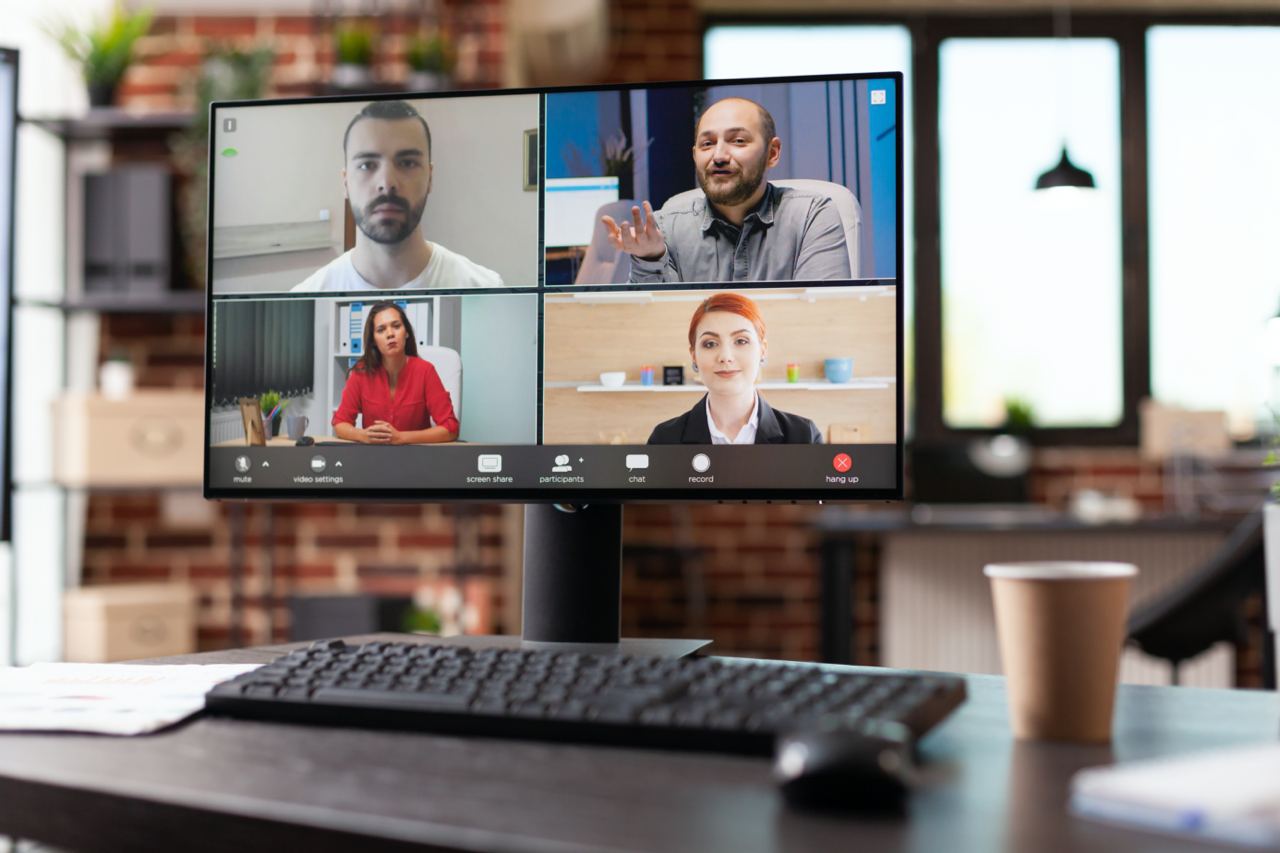
Video calls are now a standard part of how people work, learn, and collaborate. Whether you're in a fully remote team, splitting time between office and home, or joining a call from a co-working space, the basics of how you present yourself on camera still matter. Good etiquette makes meetings shorter, more productive, and less frustrating for everyone involved.These 12 tips cover the essentials – from technical setup to how you behave on screen – plus advice on hybrid meetings and the AI tools that are now built into most platforms.
Table of contents
- Top 12 video conference call etiquette rules
- Hybrid meeting etiquette
- Make use of AI tools
- Pros and cons of common video conferencing practices
- Ground rules for virtual meetings
- Frequently asked questions
- Wrap-up
Top 12 video conference call etiquette rules
1. Test run
Performing test runs can save you a lot of future pain and disappointment. We recommend you run through our online meeting checklist before starting large or important meetings. You don't want to be in the position of having everyone join only to discover that your platform isn't working as expected.
Check your camera, microphone, screen sharing, and internet connection at least 10 minutes before an important call. If you're using a new platform for the first time, do a practice session the day before – not five minutes beforehand.
2. Dress appropriately
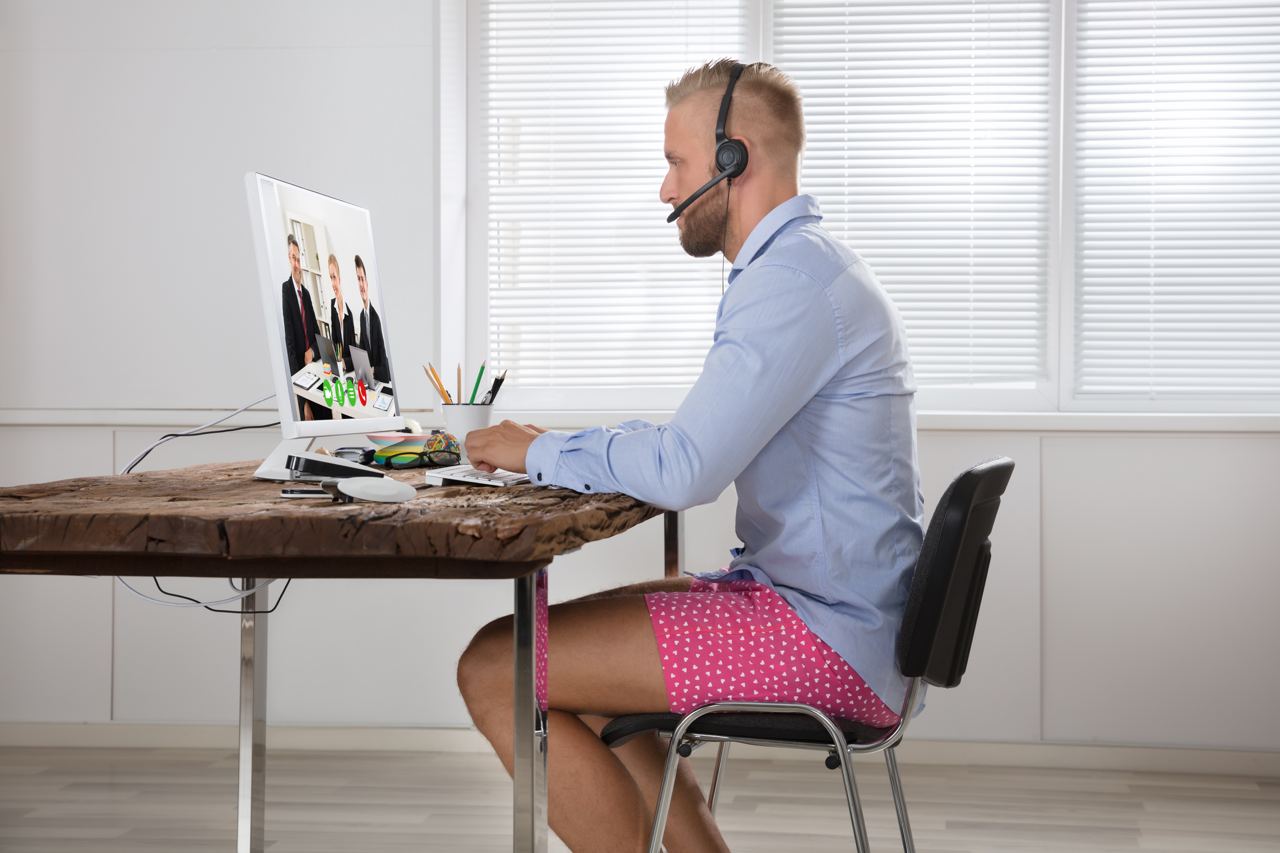
No pyjamas or bathrobes at online meetings. Remote working gives us some wiggle room in terms of what we wear, but that doesn't make it a free-for-all. The rule of thumb: dress according to your audience and use common sense.
For informal team meetings, wear comfortable clothes that you'd normally wear around the house. If you have a job interview or a board presentation, break out the smart casual or business casual attire.
Another good rule is to avoid the extreme ends of the dress spectrum. It might come across as sloppy wearing slouchy clothes, but it can appear equally odd turning up to a team sync in a three-piece suit.
Ask yourself: 'What would I wear if I was attending in person?' Dress at that level or one below.
3. Get your lighting and sound right
Lighting and sound are the difference between an amateurish appearance and looking polished and professional. When it comes to lighting, check out our complete lighting guide. For best results, go with three-point or two-point lighting.
To instantly improve your lighting:
- Avoid harsh backlighting (don't sit in front of a window)
- Avoid downlighting (overhead-only light creates shadows under your eyes)
- Use multiple light sources
- A ring light or laptop light is a worthwhile investment
You also can't beat a high-quality microphone. Microphones come built into headsets or as stand-alone desk mics. Your default laptop or webcam speaker usually isn't going to cut it – high-quality audio helps you keep your audience's attention and avoids the constant 'can you repeat that?' problem.
4. Sort out your background
Your background can cap off a clean and professional setup or be a distracting eyesore. We recommend choosing a simple background – check out our guide to the best virtual backgrounds for options.

If you want to go the extra mile, dedicate a specific wall in your office as your permanent video call backdrop. Choose a simple colour or a tidy bookshelf, and your background will always work for you rather than against you. Virtual backgrounds built into most platforms are a quick fix, but they can glitch around the edges of your hair or hands – a real background is always more reliable.
5. Use eye contact
Virtual eye contact works the same as in person. It's much harder to focus on what someone is saying when they aren't looking straight at you. Many of us fall into the trap of looking at our colleagues on the screen instead of into the camera.
The fix: position your webcam at eye level and look at the camera when you're speaking. It feels unnatural at first, but it makes a real difference to how engaged your audience feels. If you need to glance at notes or the chat, that's fine – just make sure you're looking at the camera for most of your speaking time.
6. Mute when you're not speaking
Always encourage colleagues to mute their mics when they aren't talking. This should be one of the most important rules in your team's virtual meeting handbook.

How many meetings have you been in that got derailed by background noise? Doorbells, pet sounds, keyboard clicks, eating – these sounds are distracting for everyone. Keep distractions to a minimum by making it a default to be on mute when it's not your turn to speak.
Most platforms now have AI-powered noise cancellation (including Digital Samba), which helps filter out background sounds automatically. But muting is still the safest approach, especially in larger meetings.
7. Follow screen-sharing etiquette
The key thing with screen sharing is to be careful what you show. You don't want to click on your presentation only to realise you just shared a confidential email or a personal chat window.
Good practice: keep what you want to share in a separate browser window or tab, and close anything you don't want others to see before you start sharing. If your platform lets you share a specific window rather than your entire screen, use that option – it's safer.
8. Stay focused
Why should your attendees stay focused if you aren't? This is one of the reasons why eye contact matters so much. If the host appears distracted – checking their phone, typing emails, glancing away – you're giving everyone else permission to do the same.

If the host is focused, there's a much higher chance that everyone else will be too. Close unnecessary tabs, put your phone face down, and give the meeting your full attention.
9. Be punctual
Just because you're working remotely, it doesn't mean it's okay to be late. Joining late disrupts the flow, forces people to repeat themselves, and signals that you don't value others' time.
Aim to join 1–2 minutes early. Use that time to check that your audio and video are working. If you know you'll be late, send a message to the organiser beforehand – don't just appear 10 minutes in without explanation.
10. Use your platform to boost engagement
Engagement is your best friend. Interactive tools like hand-raising, Q&A, and polling are great ways to keep people's attention. We recommend adding an interactive element every 10–15 minutes to stop people from losing focus.
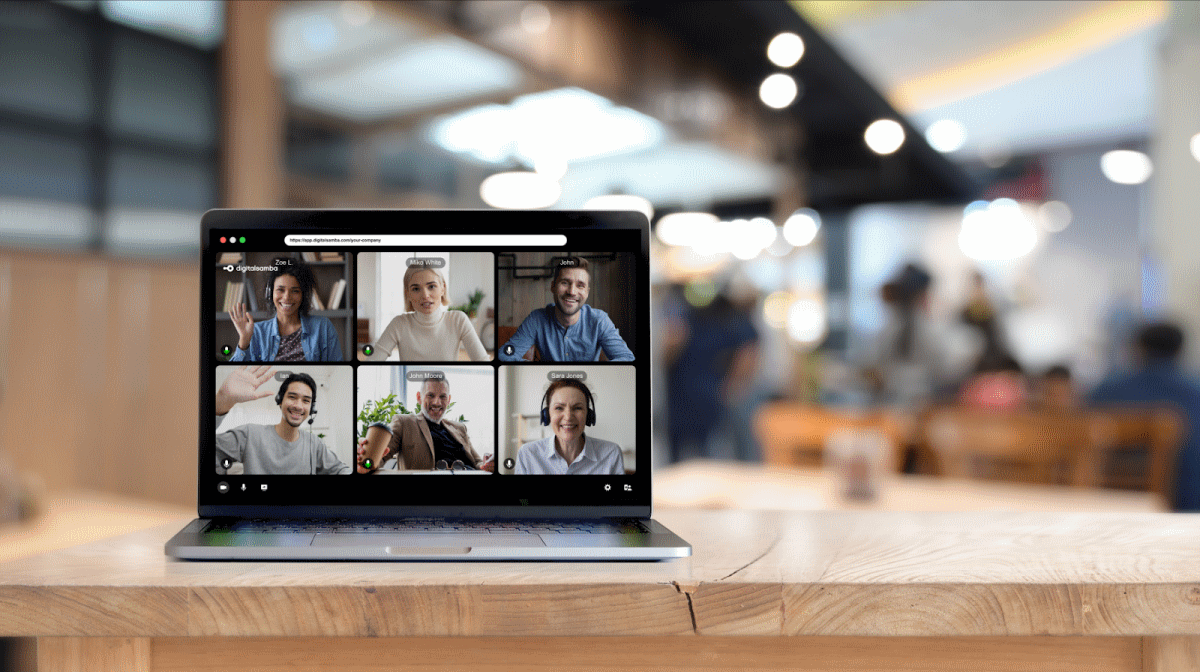
Digital Samba includes interactive features like polls, Q&A, hand-raising, and chat. Your choice of platform will play a big role in how engaged your participants are – if your platform doesn't support interaction, your meetings will feel like one-way broadcasts.
11. Be prepared
If you want to get the most out of your online meetings, you must be prepared. It's considered good etiquette to show up ready, especially if you're the host. Get any notes, materials, and files organised well in advance.
You might want to prepare some physical notes to keep you on track during the meeting. One popular technique is to write key points or cues on sticky notes and place them around your screen where only you can see them.
12. Speak clearly
Presenting your ideas clearly is good practice for any meeting, but it matters even more on video. Speaking clearly helps ensure you're delivering your point in a way that everyone can understand. It's common for online meeting participants not to ask the host to repeat themselves if they mumble or have unclear audio.
Audio quality plays a big role here. You can speak as clearly as you like, but you'll still be hard to understand if your microphone is poor. If you're presenting to a group, consider using a dedicated USB microphone rather than relying on your laptop's built-in mic.
Hybrid meeting etiquette
Hybrid meetings – where some participants are in a physical room and others join remotely – have become the norm in 2026. They come with their own etiquette challenges:
For remote participants:
- Speak up if you can't hear or see the room clearly. In-room participants often forget that remote attendees have a different experience.
- Use the chat or hand-raise feature to signal that you want to speak. It's easy to get talked over when you're not physically present.
- Keep your camera on so the room can see you. It helps bridge the gap between physical and virtual presence.
For in-room participants:
- Face the camera when speaking, not just the people in the room. Remote participants need to see your face and hear you clearly.
- Repeat questions from the room for the benefit of remote attendees. If someone in the room asks something, the remote participants often can't hear it.
- Use the meeting platform's chat for shared notes, links, and action items – not just the whiteboard in the room.
For the meeting organiser:
- Invest in a decent room microphone and camera. A laptop propped open on a conference table doesn't work well for the remote participants.
- Assign someone to monitor the chat and relay remote questions to the room.
- Start and end on time. Hybrid meetings that run over are especially painful for remote attendees.
Make use of AI tools
Most video conferencing platforms now include AI-powered features that can improve meeting quality without any extra effort on your part:
- Noise cancellation filters out background sounds like typing, fans, and street noise. Enable this in your platform settings – it makes a noticeable difference, especially in open-plan offices or at home.
- Live captions display what's being said in real time, which helps participants who are hard of hearing or joining in a noisy environment. They're also useful when someone has an accent that's harder to follow.
- AI meeting summaries generate notes and action items after the meeting ends, so you can focus on the conversation instead of typing notes.
- Virtual backgrounds and blur let you hide a messy room without needing a physical backdrop. Most platforms handle these well now, though a real background is still more reliable.
If your current platform doesn't offer these features, it might be worth switching. Digital Samba includes AI-powered captions and noise reduction as standard.
Pros and cons of common video conferencing practices
| Practice | Pros | Cons |
|---|---|---|
| Using mute when not speaking | Reduces distractions and improves audio quality | May forget to unmute when it's time to speak |
| Virtual backgrounds | Hides clutter and maintains a professional appearance | Can appear artificial or glitchy if poorly configured |
| Dress code | Encourages professionalism and respect | May feel too formal for casual or internal meetings |
| Eye contact via camera | Builds engagement and trust with participants | Feels unnatural and can take practice |
| AI noise cancellation | Filters background noise automatically | May occasionally cut out speech if overly aggressive |
| Live captions | Improves accessibility and comprehension | Not always 100% accurate, especially with accents |
Ground rules for virtual meetings
Every organisation should have its own rules for online meetings. A rulebook specific to your team's needs will help make sure you get the most out of your virtual communications.
Use our 12 etiquette tips above as a starting point and adapt them based on what works for your team. Some organisations turn these into a one-page document that new hires read during onboarding – a simple step that pays off in fewer frustrating meetings.
Frequently asked questions
Wrap-up
Etiquette rules might seem old-fashioned, but they have a real role in making sure your online meetings achieve what they're supposed to. A clear set of expectations prevents meetings from going off-topic, saves time, and lets everyone know what's expected of them.
The 12 rules above work for most teams as a starting point. Adapt them to your own culture, add the hybrid meeting guidelines if your team splits between office and remote, and make sure your video platform supports the features you need – from noise cancellation to interactive tools.
If you'd like to try Digital Samba for your team's video calls, it's free to use with no account required. Start a free video call or contact our sales team if you need the embedded API for your own platform.

Share this

Top 10 Ring Lights for Video Conferencing and Streaming (2026 Guide)

Best Laptop Light for Video Calls in 2026