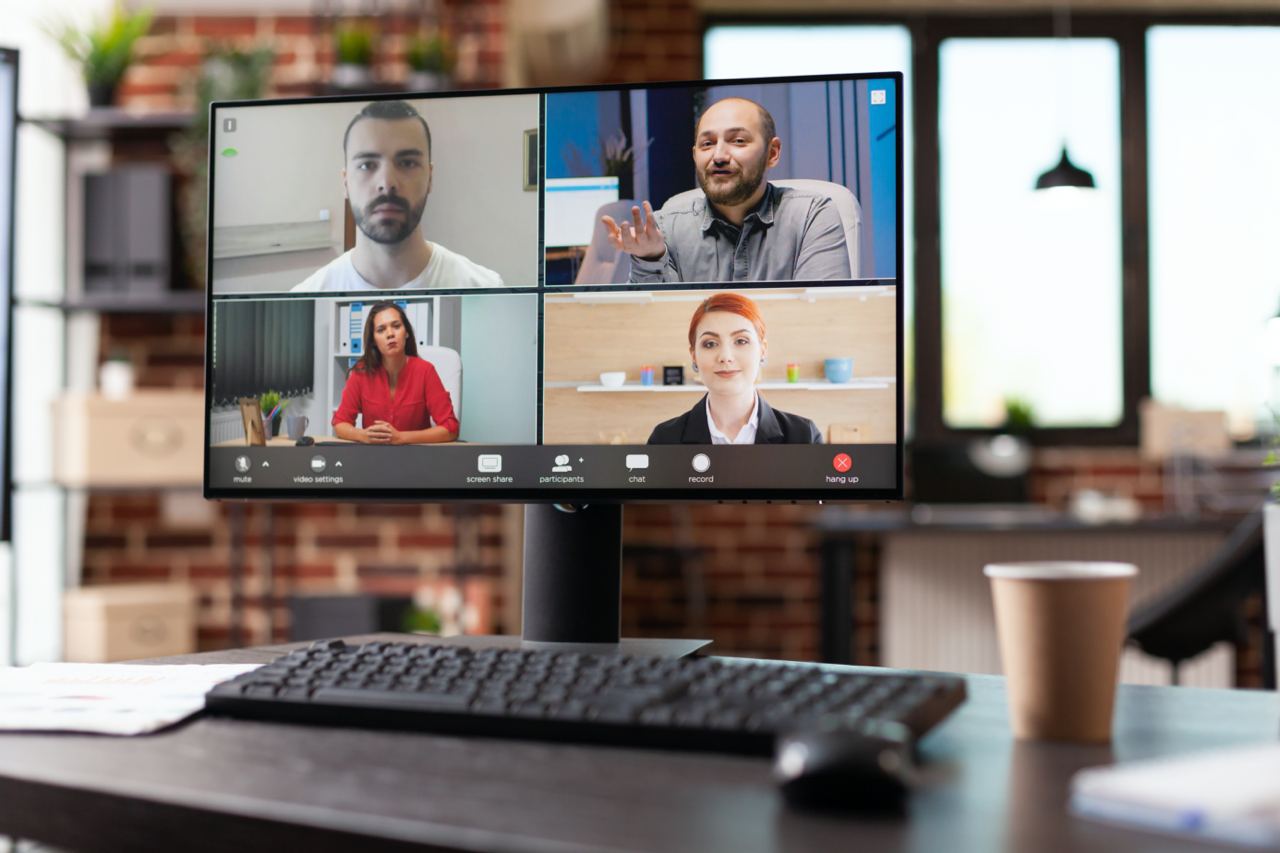
The quickest way to look better on video calls is to fix your lighting. A dedicated laptop light sits near your webcam, fills in shadows on your face, and gives you an even, natural look that no amount of camera tweaking can match. If you've ever joined a call looking washed out, backlit, or shrouded in shadow, a clip-on or monitor-mounted light will sort that out for under $100.
Table of contents
- What to look for in a laptop light
- Absolute best conference light for laptop
- Do laptops with built-in ring lights exist?
- How to position your laptop light
- Frequently asked questions
- Conclusion
Below, we cover what to look for, eight of the best options for 2026, and a few practical tips for getting the most out of whatever light you choose.
What to look for in a laptop light
Not every light is built for video conferencing. Here's what actually matters when you're choosing one:
Brightness and colour temperature
You want a light that lets you adjust both brightness (so you're not blinded or underlit) and colour temperature (so your skin tone looks natural on camera). Look for a range of at least 3000K–6500K. Warmer tones (3000K–4000K) suit dimly lit rooms and evening calls; cooler tones (5000K–6500K) work better in daylight or bright offices.
The best lights let you fine-tune both settings independently. Cheaper models may only offer three presets (warm, neutral, cool), which is fine for casual use but limiting if you switch between environments often.
Mounting and size
Laptop lights come in a few form factors:
- Clip-on lights attach directly to your laptop screen or monitor. They're the most common choice for video calls because they sit right next to your webcam, illuminating your face from the front.
- Monitor-mounted bars rest on top of your display. They're wider and distribute light more evenly, but they're less portable.
- Small tripod or stand-mounted panels sit on your desk. More flexible in positioning, but they take up desk space.
For most people working from a laptop, a clip-on light is the simplest option. It travels with you, takes up zero desk space, and positions the light source right where it needs to be.
Power source
- USB-powered lights draw power from your laptop or a USB adapter. No batteries to charge, but you'll have a cable running to your machine.
- Rechargeable battery lights are cable-free once charged, which is handy for moving between rooms. But they can die mid-call if you forget to charge them. Check the rated battery life – anything under two hours is risky for a work day.
- USB-C models tend to charge faster and are more future-proof than micro-USB alternatives.
Eye safety
If you're on video calls for hours, eye strain is a real concern. Look for lights labelled as safe for all-day use, with diffusers that soften the output. Bare LEDs without diffusion can cause fatigue over long sessions.
8 best laptop lights for video conferencing in 2026
1. Logitech Litra Glow – best overall for daily calls
The Litra Glow is a compact, USB-powered light panel that clips onto your monitor or sits on a desk stand. Its TrueSoft technology produces soft, diffused light that flatters skin tones without causing eye strain – and it's certified safe for all-day use.
Brightness and colour temperature (2700K–6500K) are adjustable via physical buttons on the back or through Logitech's G HUB desktop app. The frameless diffuser eliminates hard edges and hotspots, which is why it works so well at close range.
Best for: Remote workers and hybrid professionals who need reliable, plug-and-play lighting for daily video calls. Its monitor mount is one of the sturdiest in this category.
Price: ~$60 (frequently on sale for $49–54).
2. Elgato Key Light Mini – best premium portable option
The Key Light Mini packs professional-grade lighting into a compact, battery-powered form factor. It offers Wi-Fi control through Elgato's app, an impressive colour range (2900K–7000K), and a built-in rechargeable battery that lasts several hours.
It also works while charging via USB-C, has a magnetic back for flexible mounting, and includes standard threads for tripods. If you want the most control over your lighting and don't mind paying for it, this is the one.
Best for: Professionals who switch between locations, present to clients, or record video content. Overkill for casual calls, but excellent for anyone who takes their on-camera presence seriously.
Price: ~$90–100.
3. Lume Cube Video Conference Lighting Kit – best suction-cup mount
The Lume Cube kit includes a small square LED panel, a suction-cup mount that sticks to your laptop lid, and a mini tripod for desk use. It's one of the few lights designed specifically for laptop screens rather than monitors.
Adjustable colour temperature runs from warm to daylight, and the built-in diffuser softens the output. The rechargeable battery gives a couple of hours of use, and it runs indefinitely when plugged in via USB-C.
Best for: Laptop-only users who want a light that mounts directly to their screen without a clip. The suction cup is surprisingly secure on smooth surfaces.
Price: ~$60–70.
4. Cyezcor Video Conference Lighting Kit – best budget clip-on
This simple clip-on ring light is one of the most popular budget options for video calls. It clips onto laptops or monitors up to about an inch thick, plugs into USB, and offers three colour temperature modes with five brightness levels.
It's not going to win any design awards, but it does the job. The 48 LEDs put out enough light for a well-lit face in a dim room, and the clip is padded to avoid scratching your screen.
Best for: Anyone who wants better lighting for under $15. Students, occasional remote workers, and anyone who just needs to not look dark on Zoom.
Price: ~$10–15.
5. Neewer NL-60AI Clip-on Light – best for phones and thin laptops
Neewer's NL-60AI is a slim, clip-on light with a built-in battery and adjustable brightness and colour temperature. It's designed for phones but works well on thin laptops and monitors too.
The light tilts back and forth for angle adjustment, and it charges via USB-C. At around 80g, it's one of the lightest options available – genuinely pocketable.
Best for: People who take calls on both their phone and laptop, and want one light that works for both. Also good for travel.
Price: ~$20–30.
6. Neewer Clip-on LED Light Bar – best budget light bar
A slim, USB-powered light bar that clips onto your laptop or monitor. It offers several brightness levels and colour options at a price point that's hard to argue with. The clip is sturdy and non-slip, and there are no batteries to worry about – it draws power directly from your USB port.
Best for: Students, frequent travellers, and casual users who want a step up from a bare webcam without spending much. The bar shape distributes light more evenly than a small ring.
Price: ~$20–25.
7. HumanCentric Video Conference Light – best modular system
HumanCentric takes a different approach: a webcam-style light that sits on top of your monitor, with the option to expand to two, three, or four lights for wider coverage. Each light is USB-C powered with adjustable brightness and colour temperature.
The single kit works well on its own for laptop calls. The modular design is useful if you later move to a larger monitor or dual-screen setup.
Best for: People who want a clean, webcam-style mount with room to grow. The dual-light kit is particularly good for reducing shadows on wider screens.
Price: ~$50 (single), ~$80 (double).
8. Selfila Laptop Ring Light – cheapest clip-on ring
A lightweight, clip-on ring light with three colour modes (warm, neutral, cool) and adjustable brightness. It has a built-in rechargeable battery, clips to most laptops without scratching, and sets up in seconds.
The ring design spreads light evenly, which reduces shadows better than a single-point LED at this price. It won't match the Litra Glow or Elgato for light quality, but for the price, it's solid.
Best for: Budget-conscious users who want a quick, portable improvement to their video call lighting.
Price: ~$10–15.
Comparison table
| Light |
Type |
Power |
Colour temp |
Price |
Best for |
| Logitech Litra Glow |
Panel (monitor mount) |
USB |
2700–6500K |
~$60 |
Daily calls, all-day use |
| Elgato Key Light Mini |
Panel (magnetic/tripod) |
Battery + USB-C |
2900–7000K |
~$90–100 |
Premium portable lighting |
| Lume Cube Conference Kit |
Panel (suction cup) |
Battery + USB-C |
Warm–daylight |
~$60–70 |
Laptop-mounted lighting |
| Cyezcor Clip-on Ring |
Ring (clip-on) |
USB |
3200–6800K |
~$10–15 |
Budget clip-on |
| Neewer NL-60AI |
Bar (clip-on) |
Battery + USB-C |
Adjustable |
~$20–30 |
Phone + laptop dual use |
| Neewer LED Light Bar |
Bar (clip-on) |
USB |
Adjustable |
~$20–25 |
Budget light bar |
| HumanCentric Light |
Bar (webcam-style mount) |
USB-C |
Adjustable |
~$50–80 |
Modular/expandable setups |
| Selfila Ring Light |
Ring (clip-on) |
Battery |
3 modes |
~$10–15 |
Cheapest option |
Prices checked March 2026 via Amazon, B&H Photo, Adorama, and manufacturer websites.
Do laptops with built-in ring lights exist?
This is a surprisingly common question – and the short answer is: not really. A few niche laptop models have experimented with small LED arrays around the webcam, but no major manufacturer has built a proper ring light into a laptop lid as a standard feature.
The reason is practical: a ring light needs to be large enough to spread light evenly across your face, and a laptop bezel simply doesn't have the space. Even a small clip-on light outperforms any built-in LED in terms of brightness and coverage.
If you're buying a new laptop for video calls, focus on the webcam quality (1080p minimum, ideally with a good sensor) and pair it with any of the external lights in this guide. That combination will give you far better results than waiting for a laptop with built-in lighting.
For webcam recommendations, see our guide to the best webcams for video conferencing.
How to position your laptop light
Getting the right light is only half the job. Where you put it matters just as much:
-
Place the light at or slightly above eye level. If it's too low, it casts unflattering shadows upward. Too high, and your eye sockets go dark. Most clip-on lights naturally sit at the right height when attached to your laptop or monitor.
-
Keep the light in front of you, not behind. A light source behind you (like a window) turns your face into a silhouette. If you can't avoid backlighting, increase your front light's brightness to compensate.
-
Don't max out the brightness. Start at around 50–70% and adjust from there. Too much light washes out your face and can cause glare, particularly if you wear glasses.
-
Match the colour temperature to your room. If your room has warm overhead lights, set your laptop light to a warmer tone. If it's daylight from a window, go cooler. Mismatched colour temperatures make your face look oddly tinted on camera.
-
Test before the call. Open your webcam preview and check how you look before joining. Most video platforms – including Digital Samba – let you preview your camera feed before entering a meeting.
For a more complete guide to setting up your workspace lighting, including overhead lights and window positioning, see our article on home lighting for video conferencing.
Frequently asked questions
Conclusion
A laptop light is one of the simplest, cheapest upgrades you can make to your video call setup. Whether you spend $10 on a basic clip-on or $100 on a premium panel, the improvement in how you look on camera is immediate and obvious.
Pick a light that fits your laptop, your budget, and your work style. Then pair it with a solid background and a reliable video platform, and you're set.
Digital Samba offers free, HD-quality video conferencing with end-to-end encryption and no downloads required – a good match for professionals who've sorted their lighting and want a platform that looks as polished as they do.