How to live stream an event: YouTube, Facebook and beyond
Quick answer: To live stream an event on Facebook or YouTube, you need a camera, microphone, streaming software (like OBS Studio or Digital Samba) and a stream key from the platform. Connect your encoder to the platform using the stream key, test your setup with a dry run, and go live. For professional events, add a dedicated webcam, an external mic, proper lighting and a wired internet connection. Read on for the full step-by-step guide.
Live streaming to platforms like Facebook and YouTube has become an essential tool for creators, educators and businesses. Whether you are hosting a concert, webinar or community event, streaming professionally can lift the quality of your content and boost engagement.
This guide walks you through everything you need, from basic tools to advanced setups, and helps you avoid common pitfalls while keeping your stream looking and sounding great.
Table of contents
- What do you need to go live on Facebook or YouTube
- What to know about Facebook and YouTube live streaming
- Understanding stream keys and platform setup
- How to webcast a live event
- Understanding RTMP: the technology behind live streaming
- Avoiding platform violations and copyright issues
- Promoting and scheduling your stream
- Preparing your live content and script
- Dry run and test your setup
- Live streaming hybrid and conference events
- Bonus tips for better live streaming quality
- Final thoughts
- Frequently asked questions
What do you need to go live on Facebook or YouTube
Facebook and YouTube both offer built-in 'Go Live' functionality that lets anyone stream video straight from a mobile device with a few taps. That is great for casual or impromptu streams, like sharing a moment with friends or giving followers a quick update. For a more professional, polished result, though, especially for business events, interviews or branded content, a stronger setup is worth it.
A professional setup improves video and audio quality, builds credibility with your audience and keeps viewers watching for longer. Here is what you will need:
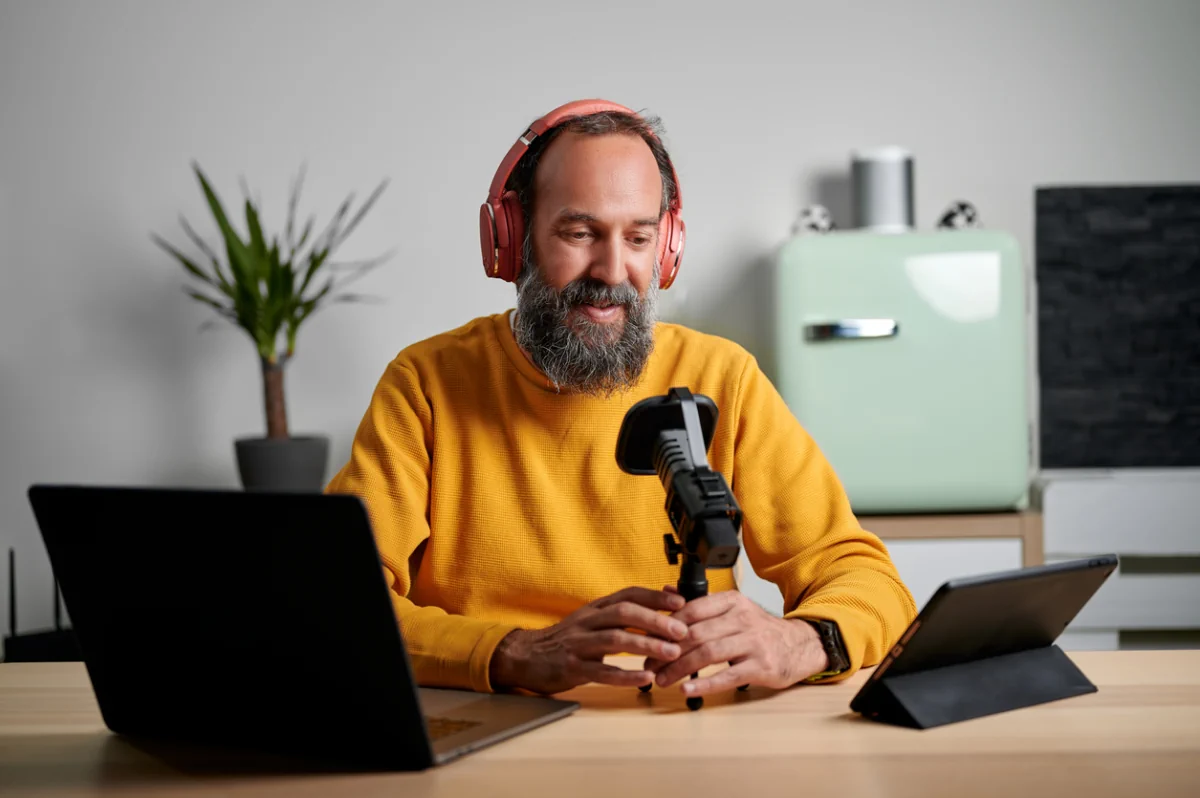
A dedicated webcam or DSLR camera
A built-in camera can work in a pinch, but it usually lacks the resolution, focus control and depth of field of an external webcam or DSLR. A 1080p or 4K webcam gives crisp, flattering visuals, while a DSLR or mirrorless camera paired with a capture card offers broadcast-level quality.
An external microphone for clearer audio
Audio matters as much as video, if not more. Poor sound is one of the fastest ways to lose viewers. An external USB or XLR microphone improves vocal clarity and helps cut background noise. Lavalier, shotgun and podcasting mics each suit different environments and speaking styles.
Proper lighting (ring light or softbox)
Lighting has a big effect on how you look on camera. Ring lights and softboxes remove harsh shadows, brighten your face evenly and help you stand out from the background. Natural light can work, but it is unpredictable, so consistent lighting gives a more reliable, professional look.
A neutral or branded background
A clean, clutter-free background keeps the focus on your message. Use a plain wall, branded signage or a virtual background, as long as it doesn't interfere with your video quality.
Tip: green screens work best with good lighting and a high-resolution camera.
A reliable laptop or desktop
Live streaming is resource-intensive. A computer with a modern CPU, plenty of RAM (16 GB or more is a good target) and a dedicated graphics card helps you avoid lag or crashes mid-broadcast. Make sure your device can handle the streaming software and connected equipment without overheating.
Streaming software
To send your video feed to Facebook or YouTube, you need a streaming solution. OBS Studio is a free and popular choice. Tools like vMix add more professional features, and browser-based platforms like Digital Samba remove the need to install software at all, which suits anyone who wants a plug-and-play experience with built-in scheduling and privacy features.
What to know about Facebook and YouTube live streaming
Before you get into setup details, it helps to know a few platform realities that affect how you stream and manage your content.
YouTube
- Easier monetisation: YouTube has lowered its monetisation thresholds in recent years, so smaller channels can reach features like Super Chat and channel memberships sooner. Check YouTube's current requirements before you plan around them.
- AI planning tools: YouTube Studio includes an 'Inspiration' tab that suggests content ideas and outlines, which helps you plan stream topics.
- Audience analytics: you can filter engagement by new versus returning viewers, which helps you adjust content after a stream.
- 30-day video retention: Facebook automatically removes live videos from profiles and pages after 30 days unless you save or download them, so download or convert important streams (for example to Reels) before they expire.
- Groups API limits: third-party apps can no longer stream directly to Facebook Groups through the Groups API. You can still use RTMP streams, though some interactive features, like in-stream comments, may be limited.
Tip: platform rules change often, so review each platform's current policies before a big broadcast.
Understanding stream keys and platform setup
To connect your streaming setup to platforms like Facebook or YouTube, you need to understand one key idea: the stream key. Think of it as a digital handshake, a unique identifier that tells the platform you are authorised to stream and where to send your video.
If you are using a streaming application like OBS, vMix or a browser-based tool such as Digital Samba, your stream won't go live until the correct stream key is in place.
What is a stream key?
A stream key is a unique code the platform generates (on YouTube or Facebook) when you schedule or start a live event. Your streaming software uses this key to send your video and audio feed to the right place on the platform.
Without the right stream key:
- Your broadcast won't reach your channel or audience.
- You might stream to the wrong page or destination by mistake.
- Your stream could fail to start at all.
How to find your stream key
For YouTube Live:
- Open YouTube Studio.
- Click 'Go Live'.
- Create a new stream or event.
- Under 'Stream settings', you will find the stream key.
- Copy and paste it into your encoder (for example OBS or Digital Samba).
For Facebook Live:
- Go to Live Producer via your profile, page or group.
- Choose 'Use stream key'.
- Copy the stream key and enter it into your streaming software.
Note: you can choose whether the key changes with each stream or stays persistent.
Mobile devices handle it for you
If you stream straight from your phone using the Facebook or YouTube app, you won't deal with stream keys manually. The apps manage this in the background, which makes it quick and user-friendly.
The trade-off is that you are limited to your phone's camera and mic, and you miss the full feature set of professional tools, like overlays, scene switching or external audio sources.
Using a stream key gives you:
- Control over where and when your stream goes live.
- The ability to schedule streams in advance and prepare properly.
- Integration with multiple platforms and external tools, depending on your setup.
It is also what makes multi-streaming and advanced workflows possible, like broadcasting to Facebook and YouTube at once through a service such as Restream (where the platforms allow it).
How to webcast a live event
If you have come across the term 'webcasting' and wondered how it differs from live streaming, you are not alone. The two are closely related, but webcasting usually means a more structured, professional broadcast, often for corporate events, conferences, training sessions or investor presentations.
What's the difference between a webcast and a live stream?
A live stream is typically informal, interactive and broadcast to social platforms like Facebook or YouTube. Anyone can join, and the focus is real-time engagement through chat and reactions.
A webcast, on the other hand, tends to be:
- Planned and produced, with a clear agenda, prepared speakers and often a production team.
- Gated or registration-based, where attendees register in advance, which makes webcasts useful for lead generation.
- One-to-many, where the audience watches and listens, with interaction limited to Q&A, polls or moderated chat.
- Embedded on a branded platform, rather than hosted on social media, so webcasts often live on the organiser's own website.
In practice, the technical setup is similar. You still need a camera, microphone, encoder and a reliable internet connection. The difference is in the presentation, audience management and where the content is hosted.
When to webcast instead of live stream
Choose a webcast when:
- You need to capture attendee data (registrations, emails).
- The event is corporate or educational, or needs a polished presentation.
- You want full control over branding and user experience.
- Privacy matters and you don't want the content public on social media.
- You need analytics on who attended, how long they stayed and what they engaged with.
Setting up a webcast
The equipment is the same as for any live stream. The main difference is the platform:
- Social platforms (Facebook, YouTube) are great for reach but give you limited control over branding and audience data.
- Dedicated webcast platforms (like Digital Samba) let you embed the stream on your own website, apply custom branding, control access with registration and capture detailed analytics.
With Digital Samba Embedded, you can host a fully branded webcast on your own domain, so your audience sees your branding, not a third-party platform's. Combined with features like breakout rooms, polls, Q&A and recording, it works for everything from product launches to all-hands meetings.
On the technical side, webcasts use the same RTMP or WebRTC protocols as live streams. The next section explains how that works.
Understanding RTMP: the technology behind live streaming
When you click 'Start stream' in OBS or any other encoder, your video and audio are sent to Facebook or YouTube using a protocol called RTMP, the Real-Time Messaging Protocol.
You don't need to understand RTMP deeply to stream, but knowing the basics helps when things go wrong, and it makes advanced workflows like multistreaming or embedding streams on your own website easier to set up.
How RTMP works (simplified)
- Your encoder (OBS, vMix or a platform like Digital Samba) captures your camera and microphone feed.
- It compresses the video and audio into a streamable format.
- It sends that compressed feed to an RTMP server URL using the stream key you got from Facebook or YouTube.
- The platform receives the feed and distributes it to viewers, usually converting it to HLS (HTTP Live Streaming) for playback in browsers.
The stream key is what connects your encoder to the correct destination. Without it, the platform doesn't know the feed is coming from you.
Why RTMP still matters
Although it is an older protocol (originally built for Adobe Flash), RTMP remains the standard for live stream ingestion. Facebook, YouTube, Twitch, LinkedIn Live and virtually every streaming platform accept RTMP input.
Newer protocols like SRT (Secure Reliable Transport) are emerging for higher-quality feeds, but RTMP's near-universal compatibility makes it the safe default for most streamers.
Using RTMP with Digital Samba
Digital Samba supports RTMP restreaming through its API. You can run a live session in Digital Samba, with all its interactive features like polls, Q&A, breakout rooms and screen sharing, and broadcast that session at the same time to Facebook, YouTube or any RTMP-compatible endpoint.
Here is how it works:
- Create a session via the Digital Samba API.
- Set the
live_stream_endpointparameter with your RTMP destination URL (including the stream key). - Start your Digital Samba session, and it automatically sends the stream to the external platform.
- Your audience can join the interactive session on your website and watch the broadcast on Facebook or YouTube.
This hybrid approach gives you the best of both worlds: interactive engagement for your core audience through Digital Samba, and broad reach through social platforms.
For a deeper technical look at RTMP, see our RTMP guide. For a comparison of streaming protocols, check out RTMP vs RTSP and HLS vs RTMP.
How to live stream an event with Digital Samba (step by step)
Digital Samba runs your event as a browser-based room and broadcasts it to the platforms you choose using its built-in Restreamer, so there is no encoder to configure and nothing for your presenters to download. Here is the full process, from empty room to live audience.
1. Create your event room
Sign in to Digital Samba and create a room for your event. Everything runs in the browser, so your presenters just open a link, with nothing to install. Room creation is available on the free plan, so you can set this up before committing to anything.
2. Add presenters and set roles
Invite your speakers and assign roles so the right people can present, moderate and control the session. Use the waiting room and the pre-join screen so everyone checks their camera, microphone and connection before you go live.
3. Connect your streaming destination
Open the Restreamer from the room toolbar and choose where to broadcast. You can stream straight to YouTube, Vimeo or Cloudflare, or paste a custom RTMP URL and stream key to reach Facebook Live, LinkedIn Live, Twitch or any other RTMP platform. If you need to find your stream key first, see the stream-key section earlier in this guide.
4. Go live
Click the restream button to start broadcasting your room to the connected platform, and click it again to stop. If you would rather not manage this manually, you can set the room to begin streaming automatically the moment the first participant joins.
5. Engage your live audience
Because the event lives inside a full meeting room, your interactive tools run alongside the broadcast: Q&A, polls, quizzes, live chat and hand-raise, with moderation controls to keep the session on track. This is what turns a one-way stream into a genuine event.
6. Record and repurpose
Record the session to the cloud for on-demand replays, and use the built-in AI transcript, summary and captions to turn a single live event into clips, recaps and accessible content afterwards.
For developers: everything above can be driven through the API and SDK on Digital Samba Embedded. Start and stop the stream with the startRestreaming() method, subscribe to webhooks for stream events, and run the whole experience white-labelled under your own domain.
Bringing in professional cameras: for multi-camera conferences or hybrid events, you can inject an external OBS or WHIP-compatible feed directly into the room and then restream it out, so your polished production and your interactive audience live in the same place.
Ready to run your next event? Start free with Digital Samba and stream your first event to YouTube, Facebook or your own platform in minutes.
Avoiding platform violations and copyright issues
Live streaming comes with more than technical considerations. You also need to follow the terms of service and copyright policies of the platforms you use. Ignoring these rules can lead to:
- Your stream being taken down mid-broadcast.
- Your account being flagged or suspended.
- Losing access to monetisation or visibility tools.
Whether you use Facebook Live, YouTube Live or a combination, it is worth knowing the do's and don'ts.
Multistreaming: know the limits
Multistreaming, broadcasting your live event to several platforms at once, can be powerful for reach, but it is not always allowed, depending on the platform's rules.
- Facebook generally discourages streaming to Facebook and other platforms at the same time using the same feed, unless you use approved tools or features.
- YouTube permits multistreaming, but you may need to disable monetisation for streams that include third-party platforms.
- Twitch historically restricted multistreaming for affiliates and partners, though its policies have relaxed with recent updates.
Tip: if you use a third-party service like Restream, check each platform's terms to make sure you are compliant.
Avoid copyrighted content
Using copyrighted music, video clips or images, intentionally or not, can trigger takedowns or muting, even during a live stream.
Common copyright traps:
- Background music playing in your room.
- Clips from TV, films or other videos.
- Unlicensed visuals or logos.
- Playing Spotify or Apple Music tracks during a live DJ set.
Both Facebook and YouTube use automated content detection (like Content ID) that scans for copyright issues in real time. Even a few seconds of copyrighted material can get your stream blocked.
Pro tip: use royalty-free or properly licensed content. Many streamers rely on libraries like Epidemic Sound, Artlist or YouTube's Audio Library for safe background music.
Read the fine print
Always check the latest terms before going live, as platform rules change regularly, especially around:
- Age restrictions and viewer targeting.
- Promoting commercial services or third-party products.
- Broadcasting sensitive or controversial content.
Each platform publishes a live streaming policy or community guidelines page:
Ignoring these can affect not just one stream but your whole account reputation.
Promoting and scheduling your stream
Even the best-produced live stream falls flat if no one shows up. Promotion and scheduling are key to drawing an audience. Unlike pre-recorded videos, live events happen in real time, so if your viewers aren't ready, you miss the moment.
Facebook and YouTube offer tools to schedule streams, send reminders and notify followers automatically, but relying on algorithms alone is risky. A strong promotion plan keeps your event from getting lost in the noise.
Why you should always schedule in advance
Scheduling your live stream ahead of time lets you:
- Give your audience time to plan.
- Let the platform's notification system do its job.
- Create a shareable link for promotional emails and social posts.
For example, YouTube's 'Premiere' feature lets viewers set reminders, join a live chat before the stream starts and get alerts when you go live. Facebook Events work similarly, letting people RSVP and get notified automatically.
Promote like an event, not just a video
Treat your stream like a real-world event. The more places you share the announcement, the more likely people are to show up.
Promotion checklist:
- Post countdown teasers and reminders on social media.
- Create an event on Facebook or LinkedIn.
- Embed the stream or a promo banner on your website.
- Email your newsletter subscribers with the link and details.
- Share behind-the-scenes prep to build excitement.
And don't stop promoting after the event. Turn the replay into a lead magnet, a content snippet or a recap blog post.
Use reminder tools and automations
If your streaming platform has built-in marketing features, you can:
- Schedule live events in advance.
- Send email reminders and calendar invites.
- Share branded event pages with custom calls to action.
This is especially useful for webinars, workshops and virtual conferences, where pre-registration and attendance rates matter.
Plan around time zones
If your audience is global, pick a time that works for as many viewers as possible, or offer more than one session. Tools like World Time Buddy or Google Calendar help you coordinate time zones. You can also replay the stream at a different time with a scheduled broadcast, giving people a second chance to attend.
Preparing your live content and script
Live streaming may feel spontaneous to the viewer, but the best broadcasts are built on preparation. Whether you are running a product demo, hosting an interview or teaching a class, a clear content plan helps you stay focused, deliver value and make a strong impression.
Think of your live stream like a stage performance: improvisation adds charm, but structure keeps everything on track.
Start with an outline or script
You don't need a word-for-word script, but you do need a roadmap. Start with:
- A welcome message and quick intro.
- Your main talking points or segments.
- Any calls to action (for example 'Subscribe', 'Ask questions', 'Download the guide').
- A closing statement or wrap-up.
Even jotting down three to five bullet points helps you stay organised and cover everything you planned.
Define the purpose of the stream
Before you go live, ask yourself:
- What's the goal? (Educate, promote, entertain, answer questions?)
- What action should viewers take afterwards?
- How will I measure success: views, engagement, conversions?
That clarity helps you design the flow and keep the audience engaged from start to finish.
Prepare supporting materials in advance
If you plan to show slides, share links or screen-share, have everything queued up and ready.
Pre-stream checklist:
- Load presentations or tabs before going live.
- Shorten URLs you will share (using Bitly or your own domain).
- Prepare visual overlays or lower thirds in your streaming software.
- Have a moderator or assistant ready to drop links in the chat.
Digital Samba lets you upload and manage content in advance, so everything is at your fingertips when you go live.
Plan for interaction
Live streaming isn't only about broadcasting. It is about connecting.
Ways to interact:
- Greet new viewers as they join.
- Ask questions and respond to chat.
- Run polls or ask for emoji reactions.
- Address viewer comments in real time.
Tip: write out one or two fallback questions for when interaction slows, such as 'Where are you tuning in from?' or 'What's your biggest challenge with this topic?'
Practise talking points out loud
Practising aloud, even once, can reveal awkward phrasing, help with timing and reduce nerves. If you are working with co-hosts or guests, a quick run-through or pre-call saves you from tech hiccups and overlapping speech.
Live events have an exciting edge of unpredictability, but a little planning goes a long way. With a basic script, clear goals and materials prepped, you will look more confident, stay on message and deliver a stream that feels both natural and valuable.
Dry run and test your setup
One of the most common and most avoidable reasons for a failed live stream is a technical issue. Frozen video, echoing audio or unstable internet can frustrate viewers, damage your credibility and cost you momentum fast.
That is why a dry run (test broadcast) is worth doing before every live event, no matter how experienced you are. Think of it as a rehearsal to spot and fix problems before your audience sees them.
What is a dry run?
A dry run is a full simulation of your live stream, using the exact equipment, platform and software you will use on the day. You test everything:
- Internet stability.
- Audio levels.
- Lighting and camera framing.
- Screen shares and overlays.
- Stream key connection to the platform.
That lets you go live with confidence, knowing all systems are ready.
Live streaming hybrid and conference events
Streaming a conference, summit or hybrid event has different requirements than streaming from a home office. The stakes are higher, the setup is more complex and there are more moving parts to manage.
What makes conference streaming different
- Multiple cameras: a single webcam won't cover a stage presentation, audience shots and speaker close-ups. Multi-camera setups with a video switcher let you cut between angles.
- Professional audio: room microphones, lavalier mics for speakers and audio mixers make sure the in-room sound carries well to online viewers.
- Dedicated internet: venues often have shared Wi-Fi that can't handle streaming bandwidth. A dedicated, wired connection (at least 10 Mbps upload) is essential.
- A production team: someone needs to manage the stream, switch cameras, monitor audio and handle technical issues in real time.
- Hybrid audience management: remote viewers should feel included, not like an afterthought. That means dedicated moderation for the online chat, clear audio for remote viewers and, where needed, separate Q&A channels.
Tips for hybrid event streaming
- Test the venue's internet well in advance, and don't trust stated speeds without checking.
- Have a backup connection (a mobile hotspot or bonded cellular).
- Use a hardware encoder for reliability, since laptop software is more prone to overheating and crashes during long events.
- Brief in-room speakers on how to engage the remote audience, for example by repeating questions from the chat and looking at the camera.
- Record everything locally as a backup, even while streaming live.
Streaming a conference with Digital Samba
For conferences where you want interactive features alongside the broadcast, Digital Samba supports all three audiences at once:
- In-room participants view the live presentation and join the discussion.
- Remote attendees join through Digital Samba's web-based platform with full access to video, chat, polls and Q&A.
- A broader audience watches on Facebook or YouTube through RTMP restreaming.
This three-tier approach lets you serve every audience segment without giving up interactivity or reach.
Bonus tips for better live streaming quality
Once you have the basics in place, small refinements make a big difference. These tips help you stand out with sharper visuals, smoother interaction and more professionalism, even on a modest budget.
Use a second monitor for control
Running a live stream on a single screen can get overwhelming, especially when you are switching scenes, answering comments or showing slides. A second monitor lets you:
- Keep your streaming dashboard open without interrupting the broadcast.
- Monitor chat and viewer stats in real time.
- Preview scenes before making them live.
- Respond to questions without cluttering your main screen.
Enable chat moderation and delay
Audience interaction is a highlight of live streaming, but it also opens the door to spam or disruptive comments, especially on public streams. To protect your event:
- Appoint a moderator to manage the chat.
- Enable a delay so you have time to respond to or remove inappropriate comments.
- Use keyword blocking on YouTube and Facebook to filter offensive language.
Brand your stream with visual elements
Make your stream memorable with visual consistency that matches your brand:
- Display your logo or watermark on screen.
- Use custom overlays and lower thirds to introduce speakers or topics.
- Apply branded colours and fonts in your scene design.
- Add animated transitions for polish.
You can create assets with tools like Canva or Adobe Express and upload them into OBS or your streaming platform.
Record the stream for replays
Always record your broadcast, even if it is live-only. The recording can:
- Reach viewers who missed the live event.
- Become shorter highlight clips or reels.
- Be repurposed into blog posts, newsletters or podcasts.
YouTube and Facebook archive your streams automatically. If you use a standalone tool, check whether local or cloud recording is available.
Review analytics afterwards
After the stream, take a few minutes to check your stats:
- Viewer retention: where did people drop off?
- Chat engagement: when were viewers most active?
- Watch time and reach: did it meet your goals?
This feedback helps you refine your format, pick better time slots and understand your audience. Most major platforms provide a post-stream analytics dashboard, or you can connect third-party tools for deeper insights.
Final thoughts
Live streaming to Facebook or YouTube doesn't need to be complicated, but it pays to be prepared. Whether you use free tools or a full production setup, planning your content, checking your gear and understanding platform rules are the keys to a successful stream.
If you want a platform with built-in scheduling, reminders, privacy controls and HD video quality, try Digital Samba. It suits events that need to go beyond social platforms.
Event organisers increasingly use embedded live video for event platforms to keep audiences inside their own branded experience instead of redirecting them to YouTube or Zoom.
Frequently asked questions
How do I live stream on YouTube?
Open YouTube Studio, click 'Go Live', and create a stream. Copy the stream key from the stream settings into your encoder (such as OBS or Digital Samba), or stream straight from the mobile app, which handles the key for you. Do a quick test, then go live.
How do I live stream on Facebook?
Go to Live Producer from your profile or page, choose 'Use stream key', and paste the key into your streaming software. On mobile, the Facebook app manages this for you, so you can go live with a few taps.
Do I need streaming software to go live?
Not for a casual stream: you can go live straight from the YouTube or Facebook mobile app. For a professional broadcast with overlays, multiple sources or external audio, you need streaming software such as OBS, or a browser-based platform like Digital Samba that needs no download.
What internet speed do I need to live stream?
A stable wired connection with at least 5 Mbps upload works for most single-camera streams, and 10 Mbps or more is safer for HD or event streaming. A wired connection is far more reliable than Wi-Fi for live video.
Can I stream to YouTube and Facebook at the same time?
Yes, with multistreaming through a service or platform that supports it, though some platforms limit it or ask you to disable monetisation on third-party streams. Digital Samba can restream one session to several RTMP destinations at once, so you reach both audiences from a single event.
What is the difference between a live stream and a webcast?
A live stream is usually informal and public on social platforms, with open chat and reactions. A webcast is a more structured, often registration-based broadcast hosted on your own branded platform, with controlled interaction and detailed analytics.
Share this
You May Also Like
These Related Stories
Understanding RTMP Protocol: A Comprehensive Guide
Mastering YouTube Live Streaming